
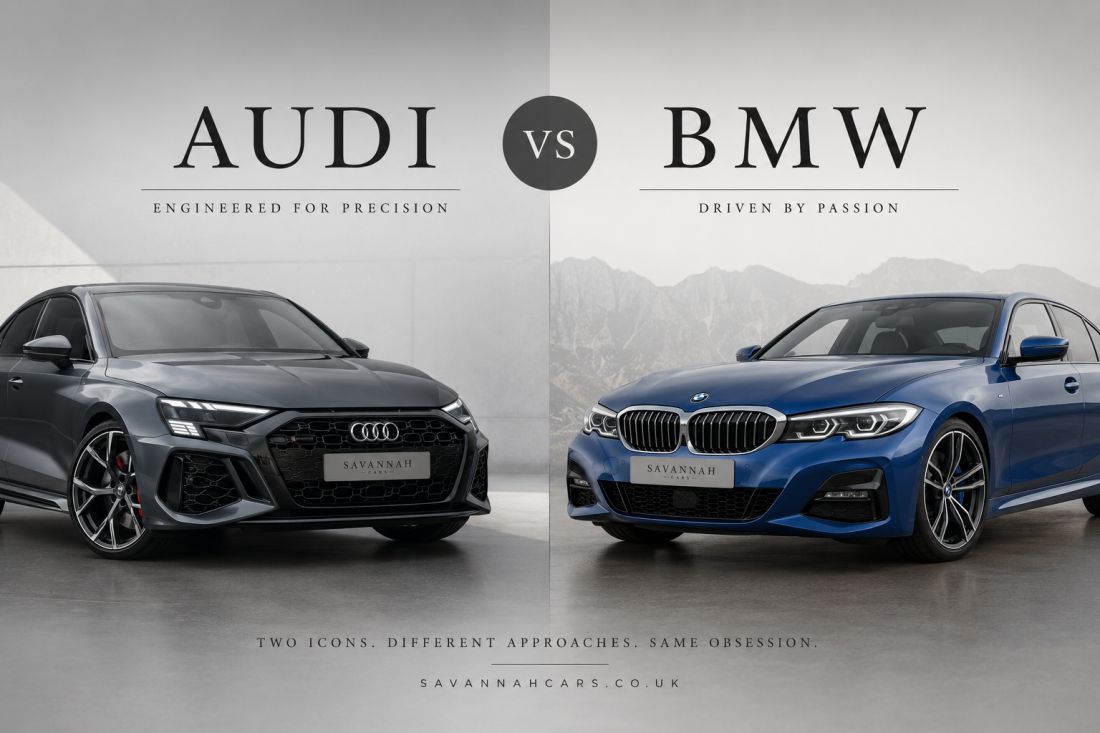
Audi vs BMW - Which One Would You Choose?
The ultimate showdown between BMW and Audi is a frequent topic of discussion in our showroom. If you are standing out on the pitch trying to choose between these two German giants, you are dealing with two completely different approaches to performance, technology, and interior design.
Let's cut through the standard marketing jargon and look at how these cars actually compare where it matters: behind the wheel, inside the cabin, and in everyday use.
The Core Identity
Neither manufacturer makes a subpar vehicle, but they place their focus in very different areas of the driving experience.
BMW: Built for the Driver
BMW builds cars from the ground up to make you feel connected to the tarmac. They utilise a front-engine, rear-wheel-drive (or rear-biased xDrive all-wheel-drive) setup that achieves near-perfect 50:50 weight distribution.
When you sit inside a BMW, the seat drops lower to the floor, the steering feels weighty and mechanical, and the dashboard angles slightly toward you. It feels sharp, agile, and rewarding on a twisting country lane.
Audi: Built for Effortless Travel
Audi focuses on absolute stability and tech-forward refinement. Their core identity relies on the legendary quattro all-wheel-drive system, designed to conquer the road with complete composure regardless of the weather.
An Audi cabin feels like a modern, minimalist sanctuary. It is engineered to insulate you from road noise and take the stress out of your daily commute, offering a quiet, planted, and highly stable ride even on wet, greasy motorways.
Interior Technology and Cockpit Layouts
The digital experience is a major decision point for premium car buyers, and both brands have taken distinct paths regarding their layout and usability.
BMW Driver-Focused iDrive Layout. Source: BMW Blog / BMW 3 Series models to feature standard BMW OS 7.0 and additional ...
Audi Minimalist Virtual Cockpit. Source: Audi Northlake / AutoGuide Reviews the Virtual Cockpit in the new 2017 Audi A4 ...
BMW iDrive
As you can see in the BMW cockpit layout above, the design remains highly driver-centric. While newer generations feature a large, seamless curved display, BMW has consistently retained its physical iDrive rotary controller on the centre console. This allows you to scroll through navigation or media menus by feel alone, without needing to take your eyes off the road to aim your finger at a touchscreen.
Audi MMI and Virtual Cockpit
Audi leans into a flat, ultra-clean aesthetic with stacked haptic touchscreens. The standout feature across the Audi range is the Audi Virtual Cockpit located directly behind the steering wheel. It replaces traditional instrument dials with a brilliant, high-resolution screen that can display a massive navigation map right in your line of sight, setting the industry benchmark for digital driver displays.
Performance, Engines, and Ride Quality
How these vehicles behave on the road highlights the contrast between their engineering goals.
Handling and Steering: BMW steering is quick and highly communicative, giving you clear feedback through the wheel about how much grip the front tyres have. Audi's steering feels lighter and more clinical—it requires less effort around town, but it offers a bit less feedback when pushing hard through corners.
Engine Lineups: Both brands offer exceptional powertrains. BMW is famous for its silk-smooth 3.0-litre straight-six turbocharged engines (found in performance models like the M340i), which pair beautifully with responsive automatic gearboxes. Audi excels at delivering massive, punchy mid-range torque from its turbocharged four-cylinder and V6 engines, managed by rapid-shifting dual-clutch transmissions.
Ride Comfort: Audi models in standard Sport or S Line trims generally offer a more compliant, forgiving ride over rough city streets. BMW models—particularly those with the highly popular M Sport packages—run on firmer sport suspension and larger alloy wheels, trading a bit of low-speed plushness for sharper cornering agility.
Everyday Practicality: SUVs and Estates
For family duties, both vehicle ranges offer excellent packaging, but with unique practical touches.
The SUV Comparison
If you are looking at a mid-sized premium SUV, the Audi Q5 and BMW X3 are the natural front-runners. The Q5 prioritizes passenger comfort with a highly isolated ride, generous headroom, and sliding rear seats to maximize boot space. The X3 targets the driver who needs a family vehicle but still wants sharp handling and crisp throttle response. For a sleeker silhouette, coupe-SUVs like the striking BMW X4 provide a more aggressive stance on the road.
Estate Car Versatility
If you prefer an estate car over an SUV, Audi’s Avant models offer perfectly square, wide boot openings with flush loading lips, making them incredibly easy to load. BMW’s Touring models counter with a highly practical split-tailgate feature, allowing you to pop open just the rear glass window to drop shopping bags into the boot without needing to raise the entire electric tailgate.
Reliability and Used Market Insights
When choosing a premium used vehicle, selecting the right specification is key to protecting your investment.
Reliability and Maintenance
BMW's recent engine lineups have shown strong long-term mechanical durability in independent reliability indexes. Audi components are structurally robust, though their advanced electrical architectures and dual-screen infotainment systems mean that verifying a complete, up-to-date service history is essential. Because Audi shares platform components across the wider Volkswagen Group, sourcing standard mechanical parts can occasionally be more cost-effective.
Trim Levels and Residual Values
In the used market, certain trim levels are highly sought after and retain their value much better:
For BMW: Look for M Sport variants. Buyers actively seek out the deeper sports bumpers, upgraded steering wheels, and firmer handling dynamics over entry-level trims.
For Audi: The S Line and Black Edition trims command the strongest residual values due to their upgraded LED lighting, larger alloys, and sleek, de-chromed exterior styling.
Summary: Which Badge Fits Your Driveway?
The choice comes down to what you want your next car to prioritize:
Go with the BMW if: You want a sharp, involving driving experience, a muscular road presence, and physical infotainment controls that are easy to use on the move.
Go with the Audi if: You want the all-weather confidence of quattro four-wheel drive, a quiet, stress-free cabin environment, and an ultra-modern, clean digital cockpit layout.
Want to check out the current BMW and Audi models available in our showroom?